The Hotel Lobby AI Trend, Explained Without the Hype
Where the Hotel Lobby AI video format came from, why the two-person setup works so well, and what to know before making your own version.
 Hotel Lobby AI Team
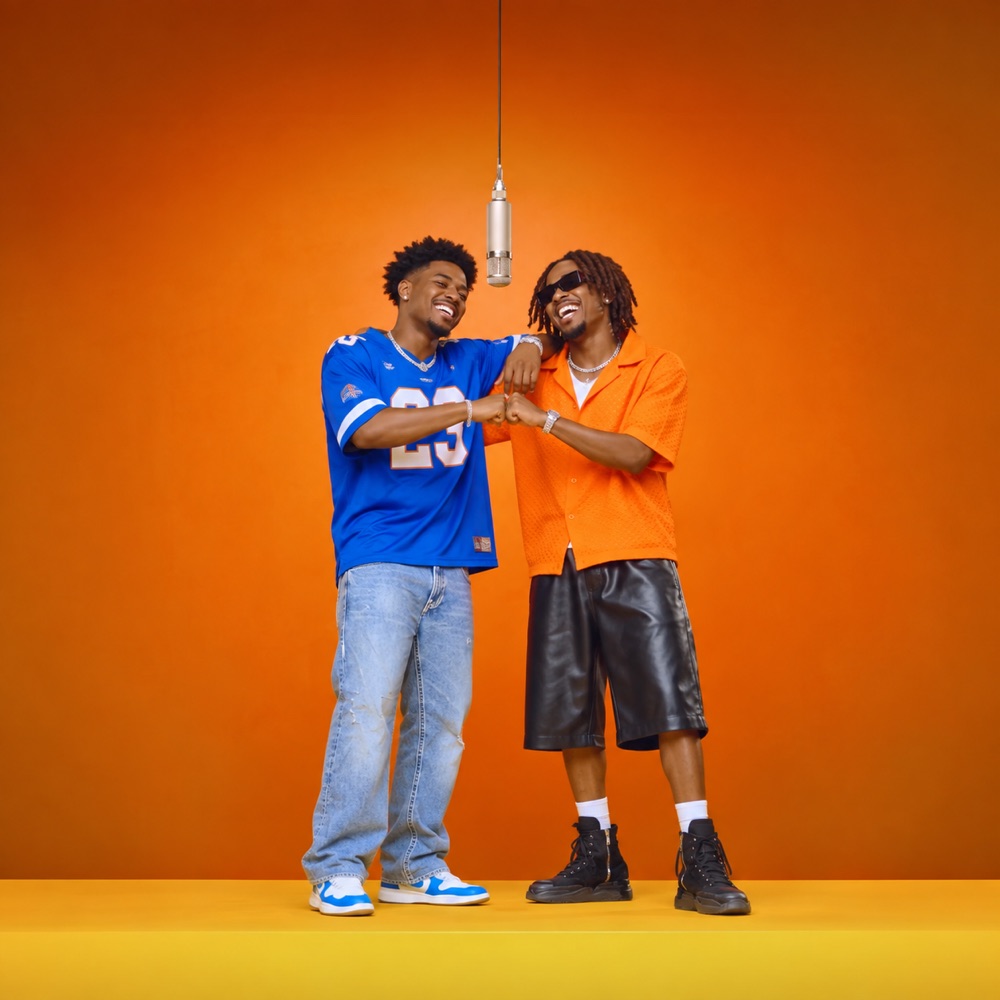
The first time I saw a Hotel Lobby AI video, I understood the joke before I understood the technology. Two familiar faces appeared in a stripped-back orange studio, sharing one hanging microphone as if they had always belonged in that performance. The pairing was the punchline.
That is the heart of the trend. It is not really about a hotel lobby, and it is not a general-purpose prompt where anything can happen. It is a recognizable two-person performance format that becomes new again whenever the two people—or characters—change.
Where did the Hotel Lobby video come from?
The visual reference comes from Quavo and Takeoff’s performance of “HOTEL LOBBY” for COLORS. The official COLORS performance was published on June 17, 2022. Its minimal set, warm orange palette, two performers, and suspended microphone make the scene easy to recognize from a single frame.
So the name refers to the song and performance—not to a video filmed in an actual hotel lobby. That distinction sounds small, but it explains why searches for “hotel lobby video” can produce a confusing mix of music clips, real hotels, and AI remakes.
Hotel Lobby AI is an independent tool and is not affiliated with COLORS, Quavo, Takeoff, Migos, or their labels.
Why does this format work so well?
Most AI video demos ask the viewer to notice the technology. This format asks the viewer to notice the relationship between two subjects.
The scene already supplies the rhythm, camera language, and performance structure. Your creative decision is the casting. Put two best friends together and it feels like an inside joke. Use a serious portrait beside an expressive pet and the contrast becomes the story. Use a couple, siblings, coworkers, or two characters with a shared history and viewers understand the premise immediately.
I think four ingredients make the format especially reusable:
- A recognizable silhouette. Two figures and one hanging microphone are readable even on a small phone screen.
- A clear left-right reveal. The first portrait maps to the left performer and the second maps to the right, so the pairing is easy to plan.
- A fixed visual world. Because the setting remains familiar, each new duo feels like a variation rather than an unrelated AI clip.
- A short payoff. A 5-second version can deliver the idea quickly, while 10- and 15-second versions give the performance more room to breathe.
What does the AI actually change?
In this generator, you provide two separate source portraits. The configured reference video supplies the motion, timing, camera, and synchronized audio; the generated result replaces the two performers with the identities represented by your images.
That is different from filming a lip-sync from scratch or asking a text-to-video model to invent an entire scene. The structure is already defined. Your photos influence identity, visible clothing, hair, and other appearance details, but the result remains generative. Hands, fabric, facial similarity, and small details can vary from render to render.
MiniMax describes recent Hailuo models as improving complex motion, expression, and visual stability, while also acknowledging that generative output remains a creative process rather than an exact copy. You can read MiniMax’s Hailuo 2.3 overview for background on the underlying model family.
The pairing matters more than the prompt
There is no prompt box in the Hotel Lobby AI workflow, so I start with a simpler question: Why are these two subjects together?
A good answer can be obvious—two brothers, a couple, longtime friends—or deliberately surprising, such as a person and their dog. The strongest combinations usually have one of these qualities:
- A relationship the audience already recognizes.
- A visual contrast in expression, outfit, age, style, or species.
- A small piece of context supplied by the caption.
If the pairing needs a paragraph of explanation, it may not land in a short clip. If the idea makes sense as a five-word caption, it is probably strong enough.
For concrete concepts, see Hotel Lobby video ideas for couples, friends, and pets.
A trend is still someone’s likeness
The playful format does not remove the need for permission. Use your own images or material you are authorized to use, and only use identifiable adults who have agreed to the intended video. Do not use a generated performance to fabricate evidence, imply an endorsement, harass someone, or place a real person in a misleading context.
When publishing realistic AI-generated content, check the destination platform’s current disclosure tools. TikTok says realistic AI-generated content must be labeled, and YouTube requires disclosure when realistic content is meaningfully altered or synthetic. See TikTok’s AI-generated content labeling update and YouTube’s altered-content guidance.
Music and platform rules also apply independently. Creating a video does not automatically grant rights to use every sound in every commercial context.
Is the Hotel Lobby AI trend still worth trying?
Yes—if you treat it as a small piece of visual storytelling rather than a button that guarantees virality. The template is familiar, but the relationship between your two subjects can still feel personal.
Choose the duo first, use clear source photos, keep the caption simple, and disclose AI use when required. Then open the Hotel Lobby AI generator, or read the step-by-step Hotel Lobby video guide before your first render.